
'An Invisible Avalanche' - What Happened in Cameroon's 1986 Lake Nyos Disaster?
[RFI] On 21 August, 1986, 1,746 people died from carbon dioxide poisoning after gas escaped overnight from the bottom of Lake Nyos in Cameroon. RFI examines what happened in the world's deadliest "limnic eruption" and how, 40 years later, our understanding of the danger posed by volcanic lakes is...
AllAfrica – Camerounsamedi 22 août 2026 à 14:561 vues
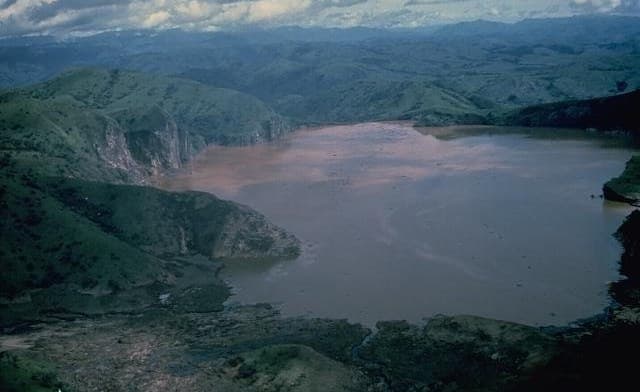
Cameroon: 'An Invisible Avalanche' - What Happened in Cameroon's 1986 Lake Nyos Disaster? On 21 August, 1986, 1,746 people died from carbon dioxide poisoning after gas escaped overnight from the bottom of Lake Nyos in Cameroon. RFI examines what happened in the world's deadliest "limnic eruption" and how, 40 years later, our understanding of the danger posed by volcanic lakes is still evolving. The village of Nyos, in north-west Cameroon, was a peaceful place. On that day, its people carried out their work as usual - some in the fields, others leading cattle out to pasture. The village was also home to a gaping hole almost 210 metres deep, at an altitude of 1,091 metres - an old volcanic crater filled with stagnant water. Locals were proud of the site, which was listed as one of the region's must-see tourist attractions. No one suspected that tragedy was about to visit this small community as they went to bed that night. Keep up with the latest headlines on WhatsApp | LinkedIn 'A blanket of silence' Sometime between 9pm and 10pm that evening, witnesses reported hearing a noise like a landslide. Scientists believe it was most likely a minor earthquake - identified as the starting point of the disaster. The lake's deepest, gas-rich layers of water rose rapidly to the surface, and carbon dioxide was released in a massive burst, creating a geyser and an enormous white cloud. Heavier than air, the gas cloud fell back down and flowed along the mountainside like an invisible avalanche, following nearby valleys at 60-100km/h. As it moved, the carbon dioxide drove out all the oxygen in its path. Sleeping villagers and animals lost consciousness and died within seconds. Victims were recorded in the villages of Nyos, Subum and Cha, numbering in the hundreds. On 22 August, survivors from villages on higher ground awoke to scenes of death and devastation. A reporter for the state broadcaster, Cameroon Radio Television Corporation, sent to the area, described "a heavy blanket of silence" - as if all life had come to a halt. Television cameras captured images of cattle, insects, birds and people lying motionless everywhere. The final death toll stood at 1,746 people and 3,500 animals. Peril and promise: gas from 'killer lake' powers Rwanda Stratified waters Forty years on from the disaster, experts agree the lake no longer poses the danger it did in 1986. The risk has been greatly reduced through artificial removal of the gas, but monitoring remains essential. In the years following the disaster, scientists first tried to understand how so much carbon dioxide had built up in Lake Nyos. Before the disaster, the idea that a lake could build up enough carbon dioxide to kill thousands of people was little known. Sign up for free AllAfrica Newsletters Get the latest in African news delivered straight to your inbox By submitting above, you agree to our privacy policy. Success! Almost finished... We need to confirm your email address. To complete the process, please follow the instructions in the email we just sent you. Error! Error! There was a problem processing your submission. Please try again later. The lake sits within an old volcanic structure and carbon dioxide from under the ground continues to seep into its deep waters. High pressure at a depth of around 200 metres allows large quantities of gas to dissolve in the water. The problem is that the lake is strongly stratified: the deep waters, rich in carbon dioxide, barely mix with the water at the surface. As a result, gas had built up over years, even decades. Twenty years after Probo Koala, Africa still grapples with 'waste colonialism' The most striking development since the disaster has been an effort to deliberately de-gas the lake. In 2001, the first de-gassing pipe was installed, reaching a depth of around 203 metres. Since that first attempt, scientific measurements show the concentration of carbon dioxide has fallen considerably, although the lake continues to receive gas naturally. Nyos has since become a global case study for research into volcanic lakes and gas-related natural disasters. Research carried out in Cameroon has also improved scientists' understanding of other lakes with similar characteristics, such as Cameroon's Lake Monoun and Lake Kivu on DRC-Rwanda border. This article has been adapted from the original version in French by Polycarpe Mossamba. Read or Listen to this story on the RFI website. Cameroon West Africa Environment Central Africa AllAfrica publishes around 600 reports a day from more than 90 news organizations and over 500 other institutions and individuals, representing a diversity of positions on every topic. We publish news and views ranging from vigorous opponents of governments to government publications and spokespersons. Publishers named above each report are responsible for their own content, which AllAfrica does not have the legal right to edit or correct. Articles and commentaries that identify allAfrica.com as the publisher are produced or commissioned by AllAfrica. To address comments or complaints, please Contact us. AllAfrica is a voice of, by and about Africa - aggregating, producing and distributing 600 news and information items daily from over 90 African news organizations and our own reporters to an African and global public. We operate from Cape Town, Dakar, Abuja, Johannesburg, Nairobi and Washington DC. Support our work Sign up for our newsletter For Advertisers Subscribe © 2026 AllAfrica Privacy Policy Contact Us About Us Sign up for free AllAfrica Newsletters Get the latest in African news delivered straight to your inbox By submitting above, you agree to our privacy policy. Success! Almost finished... We need to confirm your email address. To complete the process, please follow the instructions in the email we just sent you. Error! Error! There was a problem processing your submission. Please try again later.
Mis à jour 23 août