Biya regime still has no timeline to meet funding obligation to councils
Nearly seven years after Cameroon enacted its General Code of Regional and Local Authorities, the government has yet to establish a timeline for meeting the legal requirement to allocate at least 15% of state revenue to decentralization. Speaking before the National Assembly’s Finance and Budget ...
Cameroon Concord News – You Are What You Read — feedPar sotervendredi 27 novembre 2026 à 08:551 vues
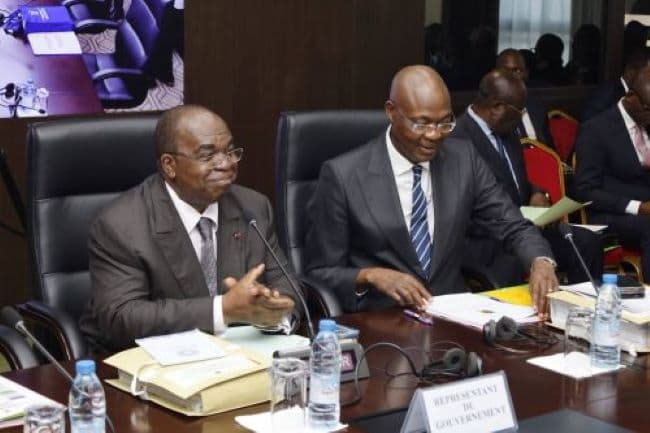
Nearly seven years after Cameroon enacted its General Code of Regional and Local Authorities, the government has yet to establish a timeline for meeting the legal requirement to allocate at least 15% of state revenue to decentralization. Speaking before the National Assembly’s Finance and Budget Committee on November 25, 2026, Finance Minister Louis Paul Motaze said the government intended to gradually increase the General Decentralization Allocation (DGD), which stood at CFA174.2 billion in 2025. The announcement follows recommendations issued by the Supreme Court’s Audit Chamber after its review of the government’s 2025 budget execution. Article 25 of Law No. 2019/024 of December 24, 2019, establishing the General Code of Regional and Local Authorities, explicitly requires the government to allocate no less than 15% of annual state revenue to the DGD. “Future finance laws will include a provision setting the General Decentralization Allocation through a gradual and cautious approach,” Motaze said. He did not indicate the fiscal year in which the government expects to meet the statutory minimum.The government argues that increases in funding for municipalities and regions must keep pace with the transfer of responsibilities previously held by central government agencies. According to Motaze, budget frameworks are currently under development to coordinate these transfers with the corresponding financial allocations. Local authorities face difficulties not only because funding falls short of the statutory requirement but also because a substantial portion of budgeted resources does not reach the payment authorization stage. According to the Ministry of Finance’s 2025 budget execution report, only CFA169.8 billion of the CFA280.1 billion allocated to the DGD was authorized for payment, equivalent to an execution rate of 60.6%. Operating expenses were particularly affected. Of the CFA111.1 billion budgeted for these expenditures, only CFA21.9 billion was authorized for payment in 2025, down 85.6% from CFA151.7 billion in 2024. The Audit Chamber has also recommended that the government publish the decree specifying how decentralization funds will be distributed at the beginning of each fiscal year. Earlier publication would give regional and municipal authorities a clearer picture of their available resources and allow them to better plan their expenditures. The recommendations come just over two months before the February 7, 2027, municipal elections, after which municipal leadership is expected to be renewed. Meanwhile, the government has yet to determine how and when it will fully implement the financial provisions of the General Code of Regional and Local Authorities. Source: Business in Cameroon
Mis à jour Il y a 6h