

What Cape Verde can teach us about teamwork and breakthroughs
On Monday, 15 June, one of the smallest countries ever to qualify for the football World Cup walks onto the field in Atlanta to face one of the giants. Cape Verde is a cluster of islands off the west coast of Africa. It has a total population of just over half a million people, the third-least-p...
mg.co.zajeudi 11 juin 2026 à 06:43
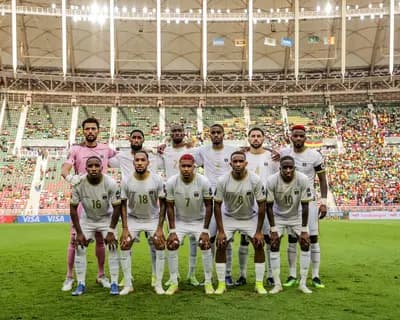
On Monday, 15 June, one of the smallest countries ever to qualify for the football World Cup walks onto the field in Atlanta to face one of the giants. Cape Verde is a cluster of islands off the west coast of Africa. It has a total population of just over half a million people, the third-least-populous country on the continent after Seychelles and São Tomé and Príncipe. It’s also the third-smallest country ever to qualify for the World Cup. It’s only the second-smallest debutant this year, with Curaçao now overtaking Iceland as the tiniest country in the history of the competition. Cape Verde will play its first World Cup match against Spain, the European champions. After that, the Blue Sharks will meet Uruguay, twice winners of the World Cup, and Saudi Arabia, whose domestic league has become one of the game’s most lavishly funded. The Blue Sharks qualified ahead of Cameroon, Africa’s most experienced World Cup team, with a record eight appearances and a long history as one of the continent’s established powers. Cameroon beat the islanders 4–1 in Yaoundé. But over the course of the campaign, Cape Verde proved more consistent. Then, in Praia, Dailon Livramento stole the ball in his own half, ran clear of the defenders and scored the goal that changed the balance of the group. It is difficult to imagine a more dramatic entrance into the big leagues of the beautiful game. Spain has a population of almost 50 million people, one of the richest footballing traditions on the planet and a seemingly endless production line of gifted players. Uruguay carries the swagger of a country that believes football belongs in its bloodstream. Saudi Arabia produced one of the great recent World Cup shocks when it defeated Argentina in Qatar. It’s tempting to describe Cape Verde’s qualification as a miracle. And why not? Sport loves miracles. We enjoy the romance of the underdog, the improbable goal, the last-minute victory and the tiny nation somehow defeating the odds. We like the idea that the universe occasionally tears up the script and that the pipsqueak nobody noticed gets a chance to rewrite it. But the word miracle can also be misleading. It can make a breakthrough sound accidental. It can obscure all the work that happened before the moment that caught our attention. Cape Verde did not arrive at the World Cup by accident or magic. It arrived through years of patient, largely invisible construction. The country joined Fifa only 40 years ago, in 1986. In its early years of international football, it played sporadically and occupied the outer edges of the global game. Even a decade ago, few people outside the islands or the Cape Verdean diaspora were paying attention to it as a serious footballing force. But the team steadily improved. It reached the quarter-finals of the Africa Cup of Nations on its debut in 2013. It reached the quarter-finals again at the tournament held in Côte d’Ivoire in early 2024. It narrowly missed the chance to compete for a place at the 2014 World Cup after being penalised for fielding a suspended player. Cape Verde went unbeaten in its five home qualifiers without conceding a single goal. This apparent miracle rested on something less miraculous and more useful: discipline, repetition and a system that held tight. We frequently treat creativity as though it were a spectacular goal: the visible moment when somebody invents something, writes something, solves something or sees what nobody else has seen. We celebrate the final flourish. We admire the shot curling into the top corner of the net. But the goal is almost never the whole story. Before the goal came the pass. Before the pass came another pass. Before that came the movement off the ball, the hours of training, the teammate who created space. Yes, creativity begins many passes before the goal. This is easy to forget because our culture prefers individuals to ecosystems. We love the myth of the lone genius. We understand the comic-book story of the brilliant mad scientist standing alone in a laboratory better than the more complicated reality of complex relationships, influences, collaborators and rivals. We prefer the mythology of isolated Tesla to the hard slog of collaborative Edison. We remember the person who scores. But the passes that set up the goal are largely forgotten. And we almost never remember the people who made the runs that dragged the defenders away. Football makes the fallacy of the solitary genius immediately visible. Even the most dazzling individual moment depends on a network. No player can pass the ball to himself or herself. No goalkeeper can protect a lead by himself or herself without defenders. This is why Cristiano Ronaldo has not yet won and why it took Messi five attempts. Ronaldo’s Portugal sides were often built around protecting his brilliance rather than distributing it; Messi’s Argentina teams took years to stop asking him to win alone before they finally learnt to be a team. Cape Verde itself is a network: 10 main islands, nine of them inhabited, scattered across the Atlantic. The Blue Sharks are a network too. Their players arrive from 25 clubs across 14 countries, shaped by different leagues, coaches and footballing cultures. Many grew up or built their careers in Portugal, France, the Netherlands and elsewhere in Europe before reconnecting through the national team around a shared Cape Verdean identity. In fact, the squad contains more players born in Rotterdam than in Praia, Cape Verde’s capital. Livramento was born in Rotterdam and joined the national team only a little more than two years ago. Cape Verde had gifted wide players but lacked a commanding presence through the middle. Livramento became the missing piece: four goals in qualifying, including the winner against Cameroon and the opening goal in the final match against Eswatini that sent his country to the World Cup. New ideas often emerge in exactly this way: when different worlds collide. Creativity flourishes at the point of connection. It grows when somebody carries an insight from one context into another, when an old tradition meets a new tool, when an outsider notices the assumption that insiders stopped seeing years ago. Too often, we approach creativity as though it were a talent contest. We search for the charismatic visionary. The important questions are less glamorous. Have we created an environment in which people can risk an unusual idea without being humiliated? Whose knowledge is missing? Its coach, Pedro Leitão Brito, widely known as Bubista, did not ask: Who is our best player? He asked: What is missing from this system and where might it come from? Cape Verde’s progress was not simply a matter of finding better footballers. It required belief. Bubista has spoken about the psychological shift within the team: the growing conviction that its players could achieve more than they had allowed themselves to imagine. There is an appealing lack of grandiosity about the team. Cape Verdeans use the word morabeza to describe a national quality of warmth, ease and “no stress”. That does not mean the Blue Sharks are casual. It means they have learnt to play without behaving as though the weight of history is sitting on their shoulders. This is another recurring truth about creativity. Before people can produce a different result, they need to loosen their attachment to an old identity. A team accustomed to thinking of itself as a minor participant will behave like a minor participant. A business that secretly believes innovation is something Silicon Valley companies do will continue producing slightly altered versions of what it made last year. Identity polices the borders of possibility. Cape Verde had to stop seeing the World Cup as a stage reserved for somebody else. Creativity requires both possibility and practice: the training ground and the final shot at goal, the accumulation of small improvements and the courage to attempt something bold that might fail publicly. We tend to notice breakthroughs only after they become impossible to ignore. By the time Cape Verde reaches the World Cup, it seems like a Cinderella story. It’s like when a company unexpectedly transforms an industry or an artist becomes famous “overnight”. The world says: Where did that come from? But somewhere, years earlier, the first pass had been played. The more useful question is not where the breakthrough came from then. It is what we are failing to notice now. Which small countries are building surprise systems while the world watches the giants lumber? Creativity is not always waiting at the centre of the field, wearing the most expensive boots. Sometimes it is making an unexpected run down the wing on the far side. Cape Verde may not defeat Spain or survive this punishing group. The World Cup can be a brutal place for debutants. But its qualification has changed the imaginative geography of football. A country this size will begin its campaign against the European champions. Its players will carry with them the work of generations of coaches, fans and communities. They will also carry a larger reminder: a breakthrough is rarely the work of one person. The goal might belong to the player whose name appears on the scoreboard. But the creativity belongs to the entire team.
Mis à jour 16 juin