
Yaoundé: Kamto makes another bid for a parliamentary seat
Cameroonian opposition figure Maurice Kamto is running for a seat in the National Assembly again, 13 years after his unsuccessful campaign in Mfoundi, the electoral district that covers all seven administrative subdivisions of Yaoundé. The former national president of the Cameroon Renaissance Mov...
Cameroon Concord News – You Are What You Read — feedPar sotervendredi 27 novembre 2026 à 08:44
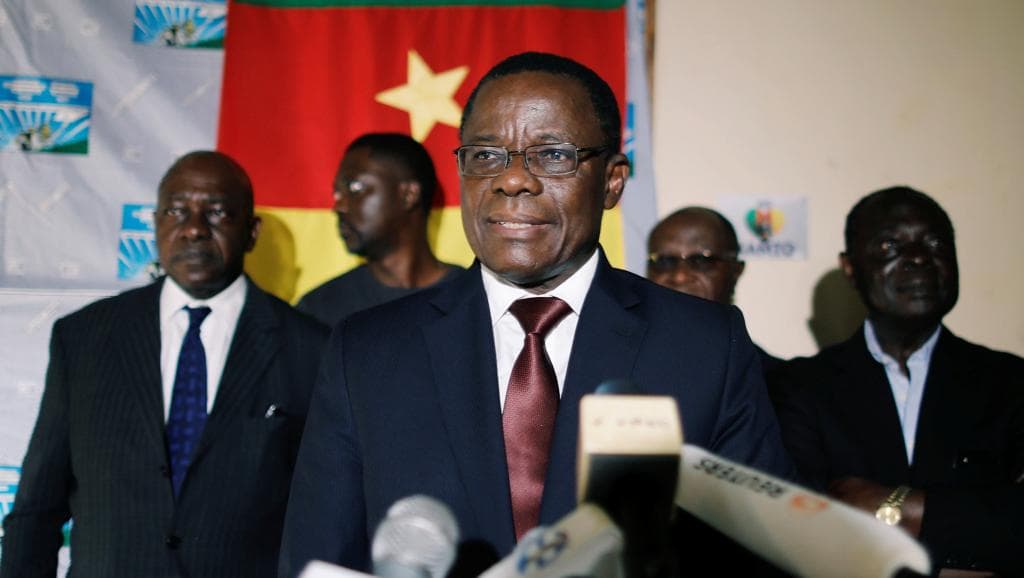
Cameroonian opposition figure Maurice Kamto is running for a seat in the National Assembly again, 13 years after his unsuccessful campaign in Mfoundi, the electoral district that covers all seven administrative subdivisions of Yaoundé. The former national president of the Cameroon Renaissance Movement (CRM) filed his candidacy for the February 7, 2027, legislative elections on Tuesday, November 24, 2026, just hours before the Elections Cameroon (Elecam) filing deadline. If Elecam’s Electoral Council approves his candidacy, Kamto will lead the CRM’s list in the district, which has seven seats in the National Assembly. Other candidates on the list include Tiriane Balbine Nadège Noah, the party’s current national president, and Dr. Apollinaire Oko, its national treasurer. Kamto, an academic and former minister delegate to the minister of justice, had not previously made his parliamentary ambitions public and did not speak to reporters when he submitted his application. For Kamto, the election offers an opportunity to enter the National Assembly for the first time. For the CRM, it represents a chance to regain elected representation after boycotting the 2020 legislative and municipal elections. Winning a parliamentary or municipal council seat would also help the party overcome one of the obstacles it encountered ahead of the 2025 presidential election. Under Article 121 of Cameroon’s Electoral Code, presidential candidates nominated by political parties without elected representatives in the National Assembly, Senate, regional councils, or municipal councils must meet the same endorsement requirements as independent candidates. They must collect signatures from at least 300 eligible individuals, with 30 from each of the country’s ten regions. If the CRM wins and retains elected representation, it would be easier for the party to field a candidate under its own banner in a future presidential election. Seven Parliamentary Seats at Stake in Mfoundi Kamto does not necessarily need the CRM to win the most votes in Mfoundi to enter Parliament. Under Article 152 of the Electoral Code, a party list that receives an absolute majority of valid votes wins all available seats in the district. If no list obtains an absolute majority, the party with the most votes in Mfoundi will receive four of the seven seats. The remaining three will be distributed proportionally among the other lists that receive at least 5% of valid votes, under the largest remainder method. Since seats are assigned according to the order in which candidates appear on each list, Kamto would enter the National Assembly if the CRM wins at least one seat. Among the CRM’s competitors in Mfoundi will be the ruling Cameroon People’s Democratic Movement (CPDM), whose recent internal candidate selection process has generated disputes. Cabral Libii’s Cameroon Party for National Reconciliation (PCRN) also intends to contest the district’s parliamentary seats. From the 2020 Boycott to a Return to Electoral Competition Kamto first led the CRM’s parliamentary list in Mfoundi on September 30, 2013, just over a year after the party was founded. Although the CRM failed to win a seat in the district, it gained representation in the National Assembly through Lazare Soub, who was elected in the Wouri East constituency in the Littoral region. Five years later, Kamto ran for president under the CRM banner in the October 7, 2018, election. The Constitutional Council declared him the runner-up with 14.23% of valid votes, behind Paul Biya, who received 71.28%. Kamto disputed the official results and claimed he had won the election. In November 2019, Kamto announced that the CRM would boycott the legislative and municipal elections scheduled for February 9, 2020. He cited, among other reasons, the lack of agreement on electoral reform and the continuing security crisis in the Northwest and Southwest regions. The boycott left the party without parliamentary or municipal representation, complicating Kamto’s subsequent attempt to run for president in 2025. With no elected representatives from the CRM, Kamto left the party in June 2025 to obtain the nomination of the African Movement for New Independence and Democracy (Manidem). Elecam rejected his candidacy for the October 12, 2025, presidential election on the grounds that two applications had been submitted under Manidem’s banner, a justification disputed by the party’s leadership. The Constitutional Council upheld the rejection on August 5, 2025, excluding Kamto from the presidential race. After denouncing the decision as arbitrary, he announced his resignation from Manidem and his return to the CRM on September 12, 2025, at the request of the party’s National Council. On October 17, 2026, Tiriane Balbine Nadège Noah was elected national president of the CRM, succeeding Kamto, who had resigned from the position again on September 8. One of the main priorities of the leadership transition was to prepare the party for its return to legislative and municipal elections. Nearly seven years after announcing the boycott of both elections, Kamto is now preparing to contest a parliamentary seat himself. Source: Sbbc
Mis à jour Il y a 8h